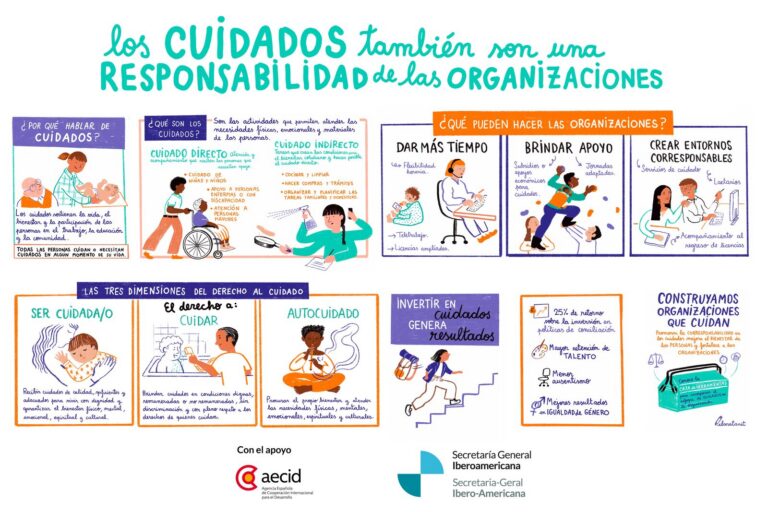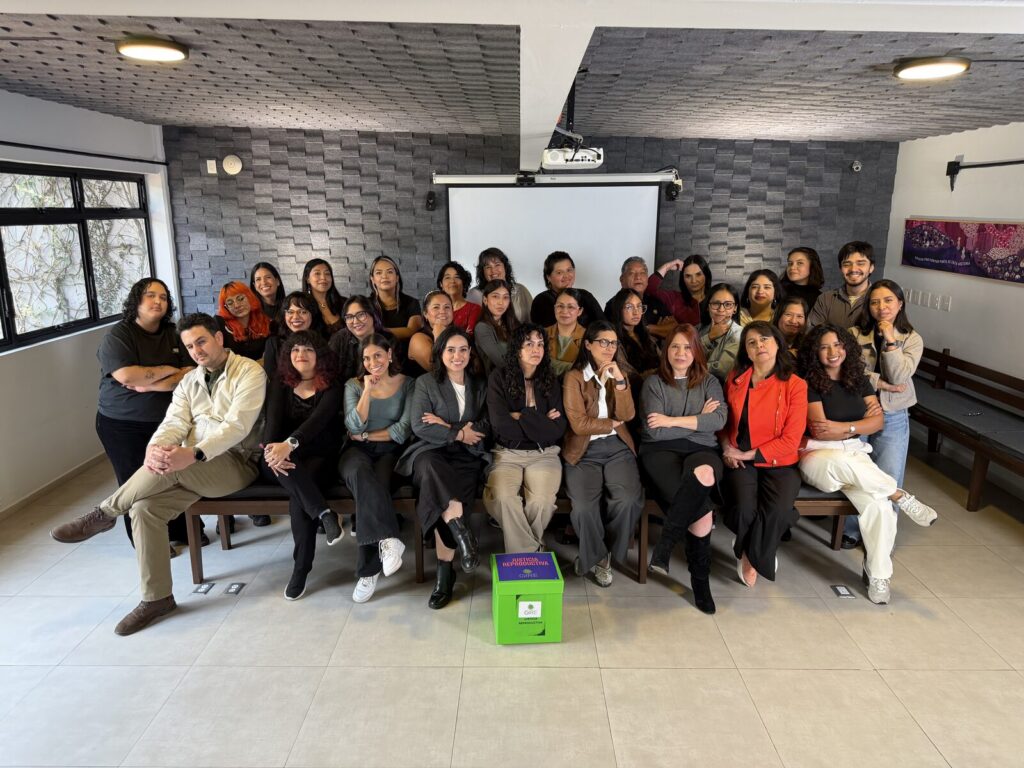
Our work seeks a transformation in Mexico by demanding reproductive justice from a human rights perspective. Our Case Documentation and Litigation area and our Public Policy Advocacy area work together so that the people we accompany can access justice and comprehensive reparation for harm when their human rights have been violated. This work also involves care work in its three dimensions: the right to care, to be cared for and to self-care.
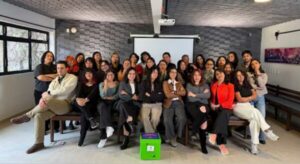
Today, on the International Day of Care and Support, lawyers who are part of GIRE share these brief reflections on their work in order to show how human rights organizations provide care, perhaps invisibly, through emotional support, listening and waiting for institutional responses.
Repairing and caring
Jenny Murrieta. Comprehensive Reparation Lawyer
Care work is present in my day-to-day work following up on the comprehensive reparation processes of the people we accompany, because I am not only in charge of carrying out the procedures, legal actions and formalities needed for the authorities to fulfill their duty to guarantee access to the measures that make up that reparation. My work also involves keeping watch over the people we accompany, over how they are living through their processes and the needs they have in relation to them; explaining each stage of the procedure to them without jargon and answering all their questions; preventing them from being revictimized, and not letting go of their hands in the face of whatever adversity arises. Accompanying them to the end of their processes means caring for these people, but also caring for one another as fellow lawyers and caring for ourselves, because we work in contexts that are complex, painful and full of difficulties that can constantly overwhelm us. We make sure that the greatest possible well-being of the people we accompany is guaranteed, but for that it is also important to take care of our physical and mental health.
I deeply admire all the people I have had the privilege of accompanying, for their will, their strength and resilience, and for always standing firm in demanding justice and the right to comprehensive reparation they are entitled to, because without that my work would not be possible.
Beyond the law
Jazmín Arely Hernández Castillo. Case Documentation and Litigation Lawyer
The work of caring has long been made invisible; we have normalized care as an obligation that requires no recognition. However, working at GIRE has taught me that going through situations of violence while being accompanied and cared for makes a difference, that caring for one another as fellow lawyers makes the work easier, and that self-care is essential to strengthen our physical and mental health. My work as an accompanying lawyer is not only to provide legal assistance or to follow up on a certain number of cases; it is more than that: it is listening, guiding, offering emotional support and understanding that legal progress must go hand in hand with empathy, clarity and respect. The fight for recognition of the right to care is long, but not impossible.
Caring for those who care, protect and defend
Luisa Fernanda Tello. Case Documentation and Litigation Coordinator
Defending human rights is extremely demanding work that requires great sensitivity in listening to and understanding the people whose rights have been violated, and bringing those experiences into the legal arena so that those violations are institutionally recognized. This defense is often long and draining; during these processes it is easy to falter, to despair, to become frustrated and, often, to take on responsibilities that are not one’s own, because of the immense commitment one has to the people being accompanied. That is why caring for those who care for, protect and defend the people GIRE accompanies becomes a silent work of support and constant presence, vital to the organization’s goals, which shows us that care is not confined to the domestic sphere but is also present and fundamental in the workplace.
To speak of accompaniment is to speak of care
Alehi Balderas Sandoval. Case Documentation and Litigation Lawyer
Recognizing care work means making visible, among other things, all those activities that make human life possible and sustain our well-being. In that sense, thinking of access to justice and comprehensive reparation for harm as processes that also require care represents an opportunity to transform the way those who seek justice are accompanied and, in turn, the way people travel those winding paths that often translate into long legal procedures, compounded by technical language that feels distant and hard to understand.
Through my work as a lawyer at GIRE, I have discovered the possibility of accompanying people with a more human approach, one that puts people at the center and recognizes that accompaniment goes beyond giving people information about their legal processes, because it involves creating spaces grounded in care, where those of us providing support and those receiving it meet as equals, where there is active listening and respect for the timing, feelings, needs and decisions of those who place their trust in us. This reaffirms for me that to speak of accompaniment is to speak of care, and of the need to make care visible as an essential pillar, one that brings hope, in sustaining the search for justice.
From each case we have learned to sustain the fight for reproductive justice while respecting the processes, wishes and needs of the people we accompany, and this has meant learning to provide comprehensive support that goes beyond legal matters; inevitably, we became people who care through hugs, listening and embodied solidarity at moments when women, trans and non-binary people and people who can become pregnant need a voice telling them that everything will be better, that in the end there is hope.