Domestic work is a major source of employment for women in Argentina, accounting for 16% of employed women. Women make up 97% of the sector’s workforce (INDEC,2026).
Argentina has a strong legal framework to protect domestic workers, including Law No. 26,844 (2013) and the 2014 ratification of the International Labour Organization’s Convention No. 189 on decent work for domestic workers. Registration is also available through a free, digital procedure, and the contributions made by employers to protect domestic workers represent approximately only 1.6% of their salaries.
Nevertheless, formal registration has remained very limited, with only 23% registered in the social security system. That means that a total of 76.7% of domestic workers do not have pension contributions paid on their behalf; 73.8% do not have paid annual leave; 71.6% do not receive the annual supplementary salary (aguinaldo); 74.7% do not receive paid sick leave; and 76.7% do not have health coverage through the social health insurance system (obra social) (Ecofeminita, 2025).
This raises an important question: how can we bridge the gap between rights recognised by law and rights that people understand and exercise in everyday life?
Understanding the barriers before designing the solutions
To better understand this gap, the International Labour Organisation (ILO) promoted a behavioural science-based study examining the factors that influence employers’ decisions to register domestic workers.
The research identified different profiles among employers who did not register their workers. Some had insufficient or inaccurate information and believed registration was unnecessary. Others understood its importance but perceived the process as complicated or costly. A third group knew their obligations but lacked sufficient incentives to comply.
These findings showed that informality does not have a single cause and that information, communication, and practical support need to be part of the response.
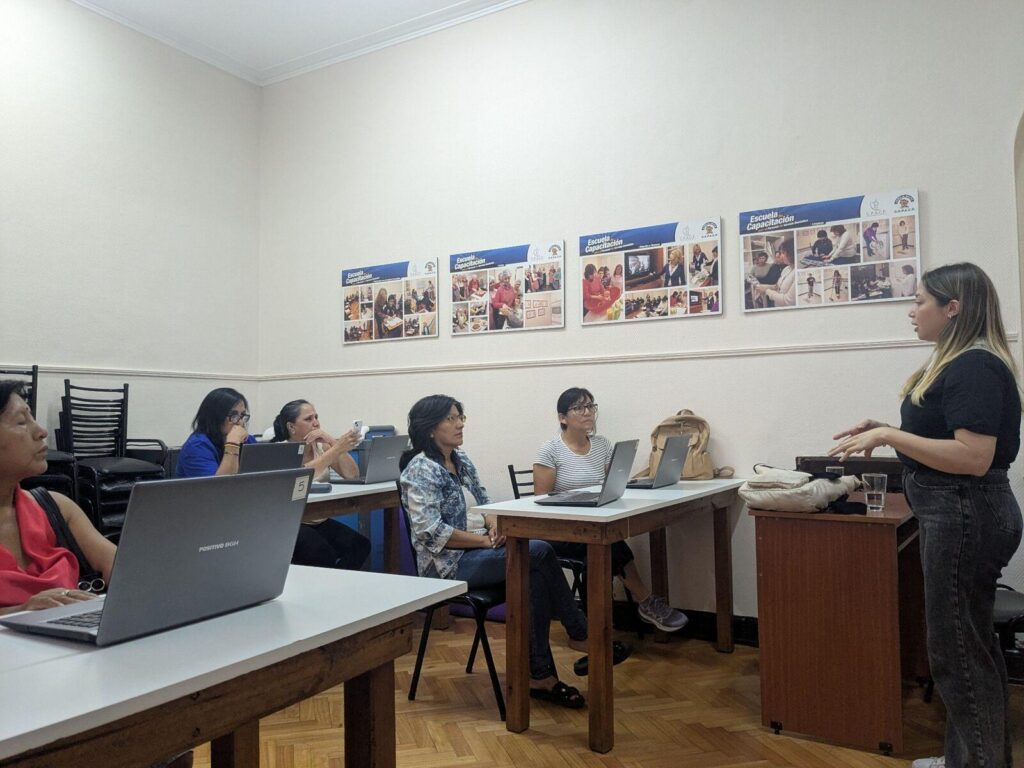
Two complementary solutions emerged. The first was a targeted communication campaign, informed by behavioural science, to encourage formal registration: Registrarte Conviene. The second involved training activities with the Unión del Personal Auxiliar de Casas Particulares (UPACP) and its domestic service training school, helping workers better understand their labour rights and the benefits of formal employment.
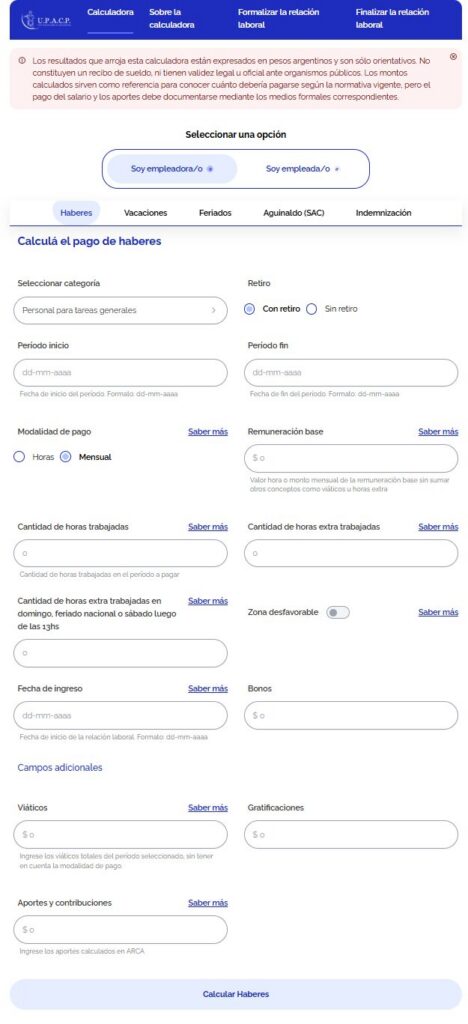
The study also revealed another practical challenge: even when people want to comply with the law, they may not know exactly how much to pay, how to calculate holiday entitlements or how to determine a final settlement.
This was the starting point for the Digital Comprehensive Calculator for Domestic Workers and Their Employers (CIDCP).
From a shared challenge to a practical digital tool
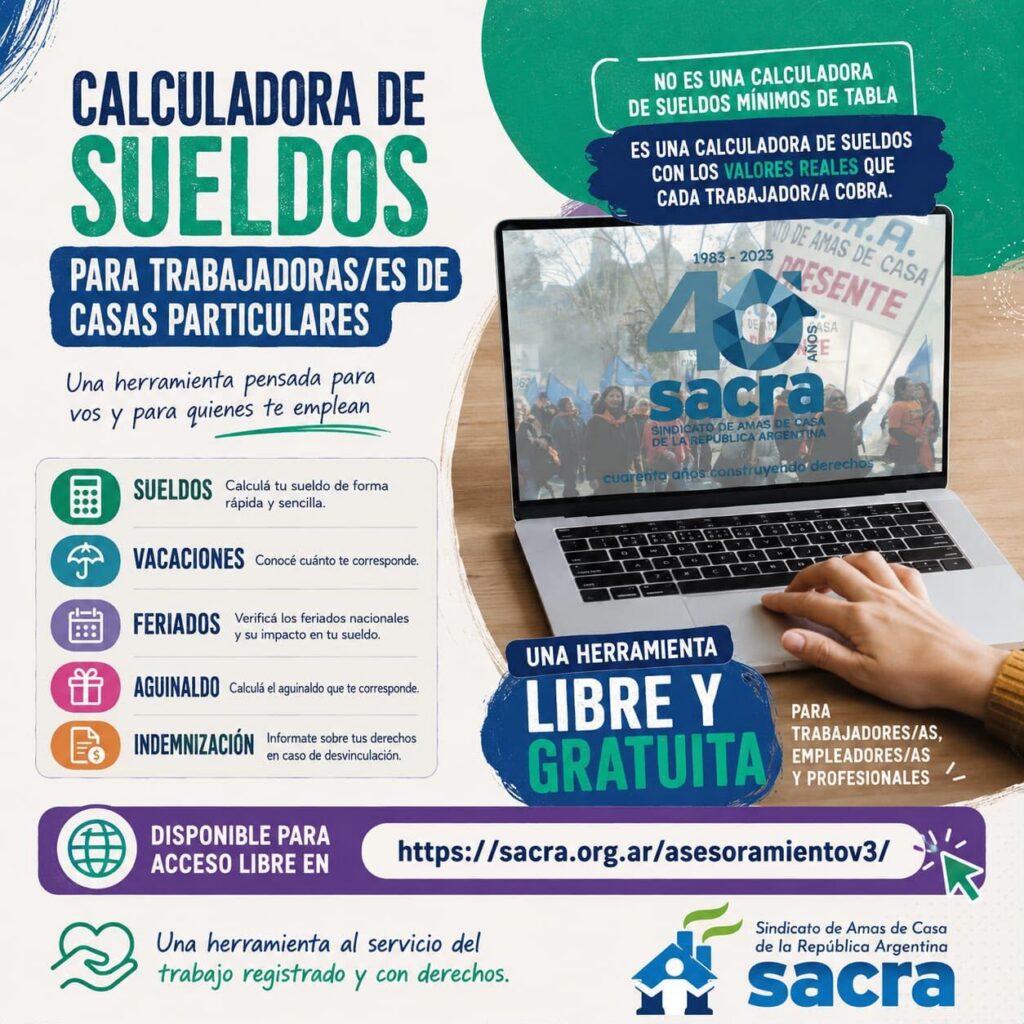
I had the opportunity to lead the calculator project, working in coordination with the ILO and two key organisations in Argentina’s domestic work sector: UPACP, which represents domestic workers, and the Sindicato de Amas de Casa de la República Argentina (SACRA).
Our shared objective was to develop a simple, accessible tool that could translate labour regulations into clear, practical information for both sides of the employment relationship.
The calculator was developed by Insight LAC and Epyca, with the support of the ILO and the involvement of UPACP and SACRA. It is freely accessible online and helps users calculate wages and other employment-related entitlements, including seniority supplements, public holidays, paid leave, the annual supplementary salary and severance payments.
For employers, it provides practical guidance to help calculate payments and better understand their obligations. For domestic workers, it offers a way to check the amounts they are entitled to receive and access information that can support conversations about their working conditions.
The calculator is intended as an informational tool: it does not replace professional advice or the formal obligations established by law. Its value lies in making information easier to access and use.
Why testing with users matters
One of the most important aspects of the development process was testing the calculator with the people it was designed to serve.
We conducted two rounds of user testing. The first involved domestic workers; the second included employers and accountants who assist with payroll calculations. Both rounds generated feedback that informed changes to the tool, taking users’ experiences into account and helping improve its usability.
This process reinforced an essential lesson: a tool can be technically sound and legally informed, but that does not automatically make it easy to use. The way people interpret information, navigate a digital interface, and understand a calculation matters just as much as the underlying formula.
Bringing users into the development process helped us move beyond designing a calculator based only on regulations and technical requirements. It allowed us to consider the real questions people ask, the difficulties they encounter, and the information they need to make decisions with greater confidence.
A concrete contribution to access to information
The calculator has also become a practical resource for organisations providing advice to domestic workers and employers.
Before its introduction, SACRA received numerous enquiries through its website and WhatsApp about issues such as severance payments, holiday entitlements and payroll calculations. According to the organisation’s reported experience, the calculator now helps answer 75% of those enquiries.
This is an encouraging example of how a digital tool can expand access to information while helping organisations respond more efficiently to recurring questions.
The calculator also has a broader potential: by making labour rights more understandable, it can help workers identify what they are entitled to receive and give both workers and employers a clearer basis for discussing their responsibilities.
Lessons for the care economy
For me, one of the main lessons from this project is that recognising rights in law is essential, but making those rights understandable and actionable is equally important.
Digital tools can contribute to closing this gap, but technology alone is not enough. Effective solutions require evidence about the barriers people face, collaboration among institutions with different perspectives, and a willingness to test and improve tools based on users’ experiences.
In a sector where women make up the overwhelming majority of the workforce, improving access to labour rights information is also part of a broader effort to recognise and strengthen the conditions under which care and domestic work are performed.
The CIDCP is one example of how collaboration between public-interest institutions, workers’ organisations and technical teams can turn a shared problem into a practical solution.
The challenge ahead is to continue ensuring that information about labour rights reaches the people who need it—and that having a right on paper increasingly means being able to exercise it in practice.
Explore the project
- Use the calculator: UPACP – Digital Comprehensive Calculator for Domestic Workers and Their Employers
- Listen to the podcast: “Acercar derechos” on Spotify
- Learn about the communication campaign: Registrarte Conviene