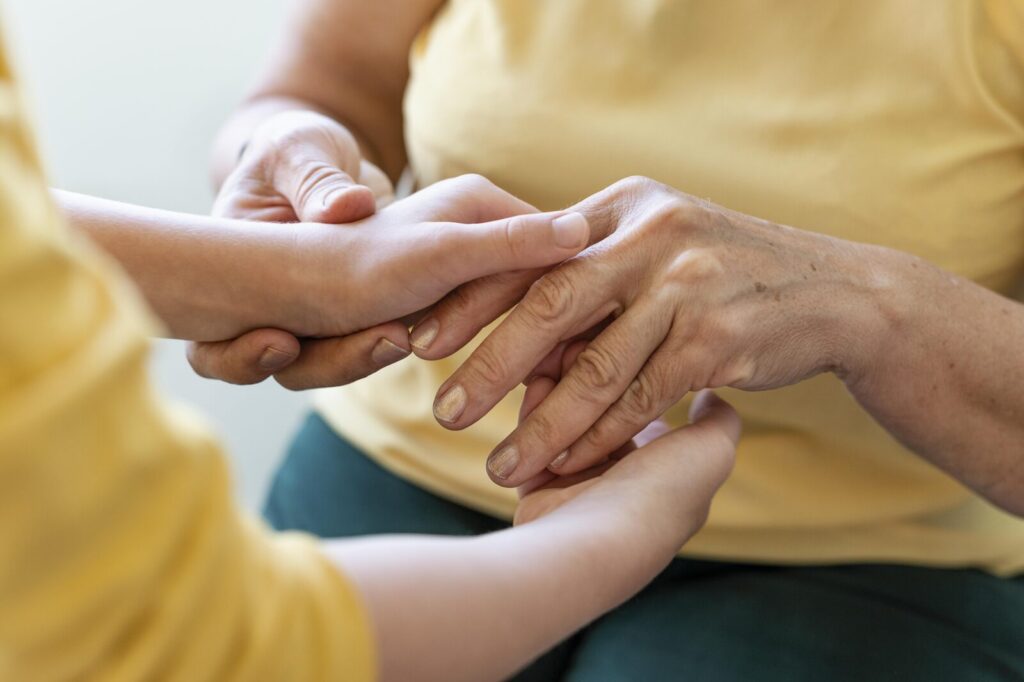
What would happen if women stopped cooking, cleaning, and caring for children and older people, for just one day? Most likely, the work that takes place outside the home could not be done either. That is because this still invisible care work is what sustains our lives, our cities and our economy. According to a survey by Lab Think Olga, unpaid care work would be equivalent to 11% of Brazil’s GDP if it were quantified—more than the output of any industry in the country. This work, which is essential to all of society, still falls only on one very specific group: families, which ends up being an almost exclusive synonym for women. Caring should not be seen as the “natural” work or the “labor of love” of mothers, grandmothers, sisters and aunts, because it involves physical, mental and material effort and, as a result, the use of time. More time taken up by caring for the home and family members means less time for self-care and for developing one’s economic, professional and political autonomy, and so the cycle of gender inequality in every area of life reproduces itself at an accelerated pace.
Beyond the invisibility of unpaid care work, it is important to point out the relevance of care as paid employment, which is still not debated enough in public and political life. According to a report by the Fundação Arymax and Instituto Veredas, 24 million people in Brazil work in some kind of care activity, which is 1 in 4 employed people in the country. In other words, a great many people are involved in an occupation that, although essential to our existence, remains socially undervalued, poorly paid, unregulated, feminized and racialized. It is Black women who sustain paid care work in Brazil.
The role of local public policies in promoting co-responsibility for care
It is in this context that Instituto Foz has been working with municipalities to place care at the center of local public policies. It is through the State assuming co-responsibility for care that we will be able to reduce the care work that falls compulsorily on women, and in this way open up paths toward gender equality.
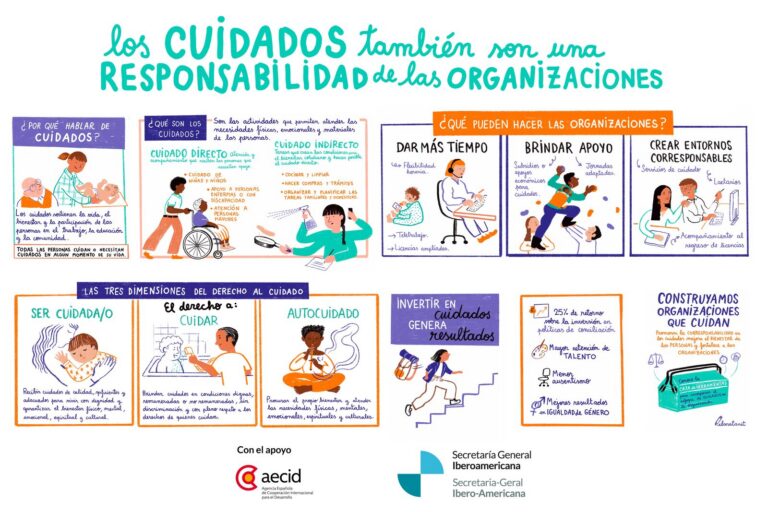
In this regard, the approval of the Política Nacional de Cuidados (National Care Policy), in 2024, regulated by the Plano Brasil Que Cuida (Brazil Cares Plan, 2025), is an important milestone in reinforcing the public authorities’ responsibility for guaranteeing the right to give care, to receive care and to self-care. Although the Plan provides for and encourages its territorialization, this “landing” of the care agenda in the territories is no simple matter. As the great geographer Milton Santos would say, territory is the ground plus identity. We therefore believe that territorializing care policy means taking into account the dynamics, lived experiences and memories that exist in each local context, so as to bring together services, public facilities and community initiatives that respond to the specific needs of those who need care and of those who provide it.
So, through the project “Cuidado na Comunidade: lavanderias comunitárias para apoiar o bem-estar de quem cuida” (Care in the Community: community laundries to support the well-being of caregivers), in partnership with Fundação Van Leer (Van Leer Foundation) and with support from the Ministério das Mulheres (Ministry of Women), we seek to reduce women’s overload of unpaid care work, especially for mothers of young children, by strengthening community laundries, which are public care facilities in the territories. And with the initiative “Cidades que Cuidam: um olhar para o cuidado remunerado no Brasil” (Cities that Care: a look at paid care in Brazil), together with Fundação Arymax and the BID (Inter-American Development Bank), we have been looking at the needs of women working in paid direct care—those who care for children, older people and persons with disabilities, for example—to understand, together with local governments, which paths could improve working conditions and recognition for this sector in each municipality.
Finally, we believe that care must be collective, and so nothing makes more sense than doing it as a network. In 2026, Foz joined the Global Alliance for Care, understanding that only joint, coordinated efforts will be able to transform the current social organization of care, which is so unequal for women. Not only in October, when we celebrate the International Day of Care and Support (established by the UN on the 29th of this month), but throughout the year, may we keep building caring societies that are fairer for all people, in all their diversity and in all territories!